
THE PINTEREST OPPORTUNITY / JEWELRY & WATCHES
Why do jewelry & watch brands
need Pinterest?
Pinterest marketing services for jewelry brands help turn product photography into content for discovery, styling and gifting. Here’s what the research means for jewelry and watch brands.
THE SHORT ANSWER
Jewelry and watches are visual purchases. Pinterest gives brands a way to appear while people explore styles, compare ideas and plan gifts — before they search for a particular store. The research supports taking that opportunity seriously. It does not mean every brand will get the same results.
01 / THE AUDIENCE
Luxury shoppers already
use Pinterest for research.
Pinterest and PA Consulting’s luxury research gives brands a useful starting point: people are using the platform to explore luxury brands and products. For jewelry, that creates an opportunity to be seen during consideration, rather than relying entirely on shoppers who already know your name.
3 in 5 luxury shoppers
say they use Pinterest to research luxury brands and products.
Pinterest / PA Consulting, 2023 ↗
Luxury research; not a jewelry-only statistic. The darker chart segment represents the remainder.
had purchased luxury watches and jewelry.
This finding concerns Pinterest luxury shoppers. Watches and jewelry were measured as one combined purchase category; it does not show that Pinterest caused the purchases.
THE WATCHES & JEWELRY COMPARISON
Nearly 75%more likely to have purchased
luxury watches and jewelry.
The same PA Consulting study reports that Pinterest luxury shoppers were nearly 75% more likely to have purchased from the combined luxury watches and jewelry category than shoppers on other platforms.
Pinterest / PA Consulting · 2023 luxury study ↗
Relative likelihood of having purchased, not a 75% purchase rate or a 75-percentage-point difference. Watches and jewelry were measured together. This comparison does not establish that Pinterest caused the purchases.
Reach people who already consider the category.
For a jewelry or watch brand, the important distinction is between a broad audience and an audience with an existing interest in the category. This research identifies overlap between Pinterest use and luxury watches-and-jewelry purchasing. It gives brands a reason to investigate the platform alongside the channels they already use.
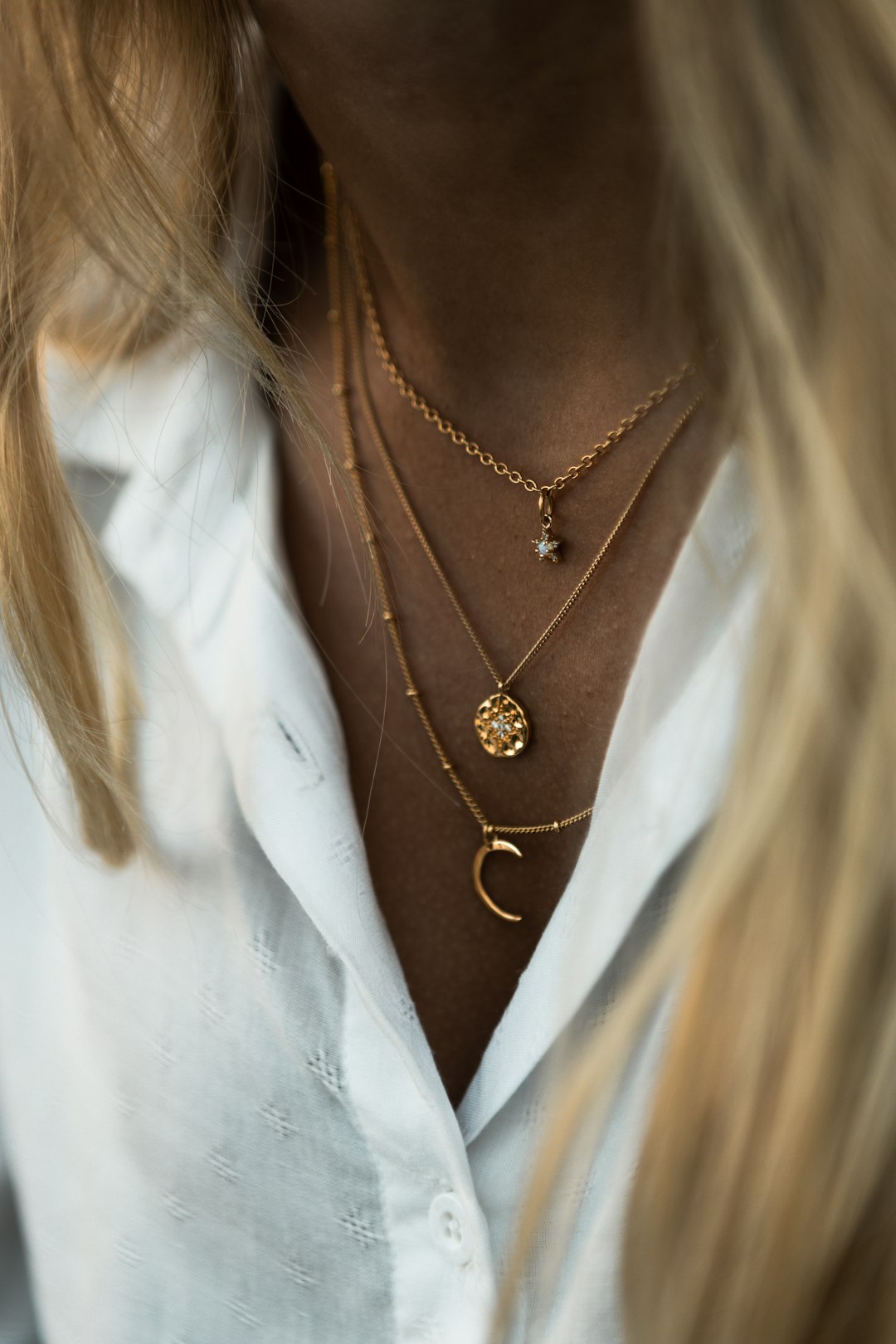
In practice, a collection can be introduced through the questions people ask before choosing a piece: how a necklace sits against a neckline, how different rings look together, or how a watch wears with everyday clothing. That is a useful role for Pinterest management for jewelry brands: turning the collection into clear, relevant visual content that leads to the right product or collection page.
The study is from 2023 and concerns luxury shoppers. It should inform a strategy, rather than stand in for current results from your own account. Review the audience and traffic you actually attract to see whether the opportunity translates to your collection.
02 / THE CATEGORY FIT
Jewelry is already part
of the conversation.
In Meltwater’s analysis, Pinterest was the most popular social network for jewelry mentions.
This measures social conversation, not purchases.
The practical value is in how many useful ways a collection can be presented. A single necklace can appear in a layering guide, an everyday outfit or a gift edit. Each approach answers a different question, while keeping the product recognisable.
Style first.
Introduce pieces through materials, shapes and aesthetics, including to people unfamiliar with your brand.
Show the detail.
Combine close-ups with worn photographs that communicate scale, proportion and combinations.
Add an occasion.
Build relevant edits for anniversaries, birthdays and bridal gifts, with clear destinations on your website.
These are content applications, not measured outcomes from the report. Their usefulness depends on how well the imagery and landing page answer the shopper’s question.
03 / WHAT PEOPLE ARE SEARCHING FOR
Interest in heirloom jewelry
and brooch styling is growing.
Pinterest Predicts 2026 identifies two relevant search-growth signals in its “Brooched” trend. Both offer starting points for brands whose collections genuinely fit the subject.
Pinterest Predicts 2026 · “Brooched”, page 5 ↗
Global English-language, normalized searches: September 2024–August 2025 versus September 2023–August 2024. Growth figures, not absolute search volumes. Search terms retain the report’s spelling.
An heirloom-inspired collection could explain craftsmanship, personal meaning or styling across generations. Brooch content could demonstrate placement on a jacket or shirt. Use the trend to develop relevant creative; avoid attaching fashionable keywords to products that do not fit.
04 / THE WIDER SEARCH PICTURE
Product discovery does not
always begin with Google.
Adobe’s research adds broader context. In its 2025 survey, 36% of surveyed consumers said they start searches on Pinterest instead of Google.
BROADER CONSUMER RESEARCH
A reason to consider
visual search.
Adobe Express · 2025 survey ↗
800 consumers and 200 business owners; self-reported responses. Only respondents using Pinterest as a search engine were included. Not jewelry-specific.
The implication is to give your products another relevant discovery route. Accurate Pin titles, useful descriptions and focused boards provide context. Link each Pin to the product, collection or guide it actually describes, so the next click continues the same journey.
05 / INDEPENDENT JEWELRY-INDUSTRY RESEARCH
Pinterest also appears in
jewelry-consumer research.
Pinterest usage in a
jewelry-consumer survey.
The Plumb Club’s 2021 Industry & Market Insights research lists Pinterest at 46% in its social-platform usage findings.
The Plumb Club / Qualtrics · Industry & Market Insights 2021 ↗
Survey of 1,049 US adults aged 25–60 across ten test markets. Respondents had some college education or higher, household income of at least $75,000, and had bought jewelry in the previous year and/or intended to buy in the coming year. The 46% figure concerns platform usage, not jewelry research or purchases through Pinterest; the release does not explicitly specify the denominator for that individual platform figure.
Evidence of audience overlap, not a sales claim.
This finding comes from a jewelry-industry organisation’s research, rather than a Pinterest advertising case study. It shows Pinterest appearing in the media habits of the jewelry-consumer sample. It does not tell us which products those respondents viewed on Pinterest, whether they followed jewelry brands, or whether a Pin influenced a purchase.
The date matters too. This is a 2021 snapshot of a defined US sample, not a current estimate for every jewelry shopper. Its value is as supporting context alongside the luxury study and the jewelry conversation research elsewhere on this page.
What should a brand do with that information?
Give shoppers a useful reason to discover and save your products. A jewelry Pinterest strategy can cover everyday styling, occasion-led edits and product details that are difficult to judge from a single catalogue image. For watches, that might mean clear wrist shots and strap combinations; for jewelry, it could mean necklace lengths, earring scale or a coordinated bridal selection.
Pinterest marketing services for jewelry brands should connect those ideas to an accurate destination on your website. A styling Pin should lead to the featured pieces or a relevant guide. A gifting Pin should lead to an appropriate selection. The research supports exploring this audience; the content and website experience determine what you offer people once they find you.
06 / A JEWELRY BRAND EXAMPLE
What happened when Mejuri
tested Pinterest Performance+?
The fine jewelry brand compared a dedicated Performance+ campaign with its business-as-usual approach. Pinterest reports these improvements:
Pinterest Business · Mejuri Performance+ case study ↗
Paid campaign results versus Mejuri’s usual approach. ROAS means return on ad spend.
This is a paid advertising example, not an organic publishing result or a BoardClicks client case study. It demonstrates what one brand achieved in a particular test, not what another jewelry business should expect.
07 / PUTTING THE RESEARCH TO WORK
What should jewelry & watch brands
actually do with Pinterest?
Start with a defined collection and a manageable content plan. For watch brands, show wrist shots, dial details, strap combinations and gifting ideas. For jewelry brands, explore layering, materials and occasions. The strongest starting point is a clear connection between the search idea, the creative and the page someone reaches.
- Organise around shopper interests. Plan relevant boards and topics around styles, materials and occasions.
- Create useful variations. Use product detail, styling and gifting angles, with accurate information throughout.
- Publish consistently. Maintain the account and keep links aligned with available products and collections.
- Review what happens. Compare available impressions, saves and outbound clicks, then refine the next content plan.
COMMON QUESTIONS
Before you get started.
Do we need an established Pinterest account?
No. You can start with a business account, relevant boards and a focused selection of products.
Do these statistics guarantee sales?
No. They support considering Pinterest, but your results depend on your collection, creative, audience and website.
Can BoardClicks manage the account?
Yes. I handle account setup, Pin creation, Pinterest SEO, scheduled publishing, day-to-day management and monthly performance reviews.
PINTEREST MANAGEMENT FOR JEWELRY & WATCH BRANDS
Want help putting this into practice?
I’m Adrian, the person behind BoardClicks. If you would like help building and managing your jewelry or watch brand’s Pinterest presence, tell me about your store.
Discuss Pinterest management ↗SOURCES & METHODOLOGY
The figures above come from six separate sources: Pinterest / PA Consulting’s luxury study (2023), Meltwater’s Retail Report (2024), Pinterest Predicts 2026, Adobe’s survey (2025), The Plumb Club / Qualtrics’ jewelry-consumer research (2021), and Pinterest’s Mejuri case study. Links and limitations sit beside each finding. These studies cover different audiences, time periods and methods; their figures should not be combined into a single purchase funnel.