
How Long Does It Take to See Results from Pinterest?
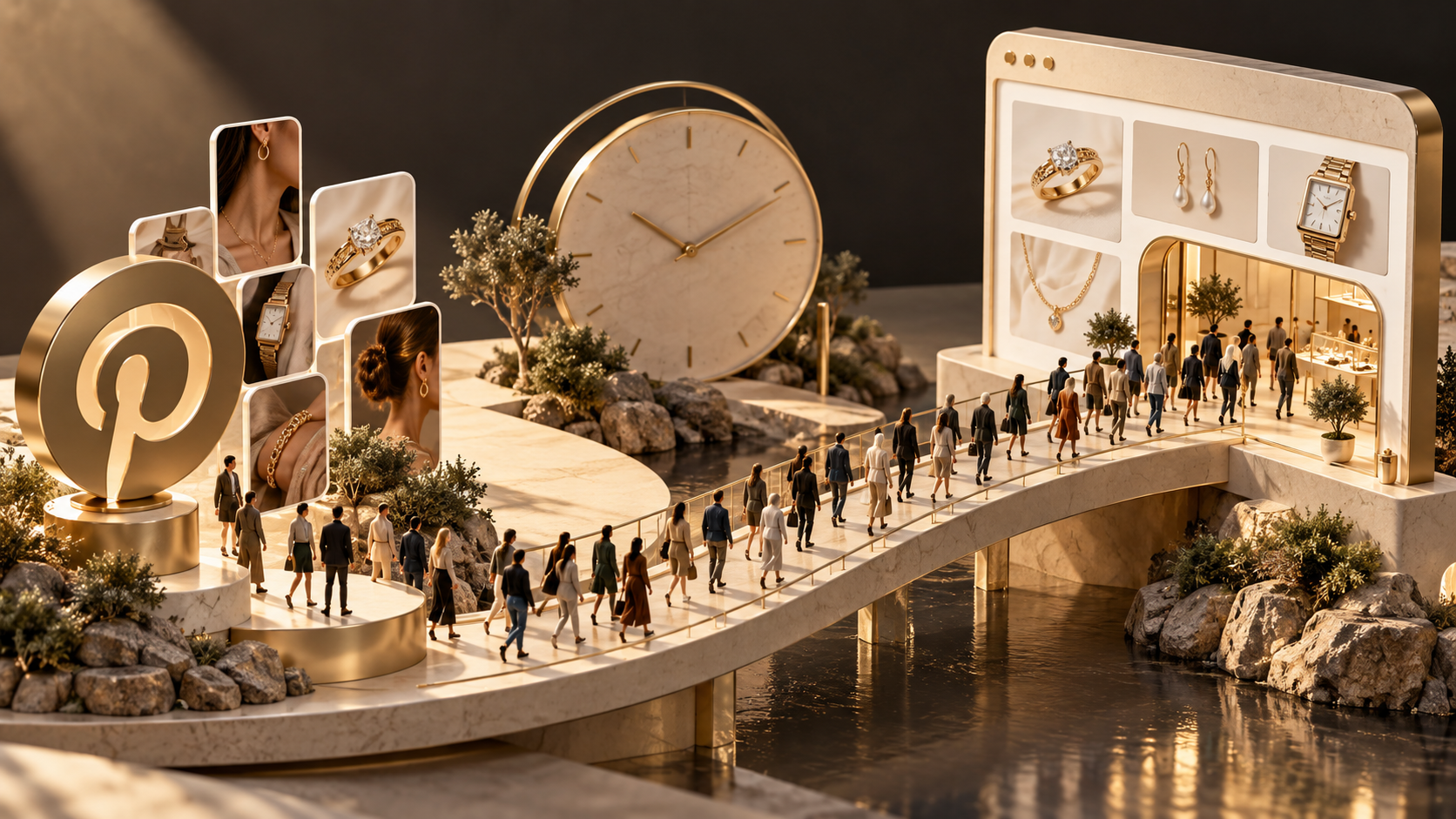
How long does it take to see results from Pinterest? Allow around three to six months of consistent, keyword-focused publishing to build meaningful traction and work towards steadier website traffic. The first few weeks are usually about getting the account established and testing content. Visibility and saves may develop before regular outbound clicks.
That is a realistic expectation for planning an organic strategy, rather than a deadline every account meets. Some brands see useful activity earlier; others need longer. The important point is that Pinterest deserves a sustained content programme, with improvements along the way.
Below is the timeline I would use to explain the journey to a business starting from scratch: what each stage is for, the signs to watch and how to keep moving towards traffic that matters.
Reviewed October 2026. The stages below are an editorial planning framework, informed by practitioner guidance and Pinterest’s documentation—not measured averages or guaranteed outcomes.
The Pinterest growth timeline
From your first Pins to a growing content library.
Prepare the account, publish your first ideas and collect an initial baseline.
Compare impressions, saves and clicks to see which themes deserve more attention.
Develop promising ideas and assess whether website visits are becoming more consistent.
Combine relevant older content with new material and refine the programme around results.
Suggested stages, not a predicted growth curve. Your account may move through them at a different pace. Individual Pins have no fixed engagement window.
Why three to six months is a sensible expectation
A new Pinterest presence starts with a limited amount of content and little account-specific evidence about what people respond to. Over several months, you can build a useful range of Pins, cover different searches and make decisions based on actual engagement.
That gives the strategy time to improve. A jewelry collection might initially be presented through straightforward product photos. Later testing can add styling ideas, gift selections and close-up details, each with a different purpose and an appropriate destination.
Practitioner estimates support thinking in months: Get Seen Management describes a three-to-six-month traffic-growth window, while Meagan Williamson’s guidance for artists distinguishes early traction from stronger growth at three to six months. These are professional observations for particular contexts, not a universal research benchmark.
Pinterest itself is clearer about the variability: its distribution documentation explains that engagement can arrive hours, days, months or years after a Pin is published. The overall account timeline and the lifespan of one Pin are therefore different things.
Weeks 1–4: setting up and testing the first content
In the first month, low traffic should not come as a surprise. You are building the starting point: a clear business profile, relevant boards, searchable Pin copy and a manageable publishing routine.
Begin with the products and topics you most want to be discovered for. A watch brand could organise its initial content around dress watches, everyday styling and gift occasions. A jewelry studio might start with necklaces, earrings and bridal pieces, provided those categories reflect what it sells.
The aim is to give each Pin a clear subject. A collection name that makes perfect sense to an existing customer may mean little to someone discovering the brand for the first time. Add useful product and style context without forcing a string of keywords into every sentence.
What to focus on during the first month
- Complete the business account and claim your website where eligible.
- Create boards that fit your products and the searches you want to serve.
- Publish original visuals with accurate titles, descriptions and links.
- Check the destinations on mobile and confirm website tracking works.
- Record the starting figures so future comparisons have context.
Our Pinterest business account setup guide covers the account foundations. Getting these right early makes the next stages easier to interpret.
What early progress looks like
The most useful first-month outcome is a functioning content programme and an initial picture of its response. You might see impressions, saves or occasional clicks, but you do not need to manufacture a sales story from a small sample.
At the same time, waiting does not fix broken links. If a Pin leads to an unavailable page or shows a product shoppers cannot find, correct that now. Patience belongs alongside routine quality checks.
Months 2–3: spotting the first signs of momentum
Once you have been publishing consistently, you have more material to compare. This is the stage to look for early patterns: a particular collection attracting attention, a visual style earning saves or a useful guide bringing people to the website.
Impressions and saves may increase before clicks become regular. They give you clues about discovery and interest, but do not assume every increase will translate into purchases.
A necklace styling image, for example, may be saved as inspiration. A Pin explaining chain lengths may give the same shopper a reason to visit a guide. Both can play a role, but they answer different needs.
What to do with those early signals
Choose a promising theme and develop another genuinely useful version. If people respond to a watch photographed on the wrist, test a different styling context or a clearer view of its proportions. Keep the product accurate and make the destination relevant.
Compare Pins of similar ages where possible. Yesterday’s upload has had a different opportunity from one that has been live for six weeks. Use both the amount of exposure and the response it received to guide your interpretation.
Keep the publishing rhythm sustainable. Pinterest’s audience-building guide recommends fresh content weekly and prioritises relevance over a fixed numerical quota. Our article on how often to post on Pinterest explains how to translate that into a working schedule.
What not to expect by month three
There is no automatic account “unlock” at 90 days. Growth may be uneven, and one unusually successful Pin does not yet establish a repeatable traffic source. Use this stage to narrow down what works rather than expecting every upload to improve at the same rate.
If the whole account remains quiet, review your topic choices, visuals, links and reporting settings. Do not replace the strategy every few days, but do make changes when you can identify a specific weakness.
Months 3–6: working towards steadier website traffic
This is the main window to plan around when asking how long Pinterest takes to drive traffic. With several months of relevant publishing behind you, the objective is to turn isolated responses into a more useful pattern of website visits.
That might mean several Pins bringing visitors to different parts of a collection, rather than relying on one image. It might mean a guide becoming a regular entry point to the website. The useful change is breadth and repeatability, not simply a larger monthly-view figure.
Older Pins can contribute alongside recent uploads. If a piece of content remains relevant and its destination stays useful, its role does not end on publication day. Pinterest’s content guide explains that discovery is not simply chronological and that relevant content can keep appearing over time.
Which results matter most at this stage?
Use Pinterest Analytics to distinguish on-platform visibility from off-platform activity. Impressions show appearances on screen; saves show that someone kept an idea; outbound clicks indicate actions leading away from Pinterest.
Then review recorded website visits and the actions relevant to your business. For an online store, those might include product exploration, enquiries, add-to-cart activity and purchases, depending on the tracking you have configured.
Traffic and sales need separate interpretation. A visitor choosing an expensive watch may want more information before buying. A visitor shopping for a gift may be ready sooner. These are possible journeys, not fixed purchase timelines.
What to improve during months three to six
- Expand themes that repeatedly attract relevant visitors.
- Give strong collections different creative treatments and search angles.
- Check that landing pages deliver what the Pins promise.
- Review seasonal opportunities before their main shopping period.
- Keep a monthly record of changes, traffic and useful customer actions.
If traffic is still limited, the question becomes more specific: are Pins being seen but not clicked, or are they barely being seen at all? The answer points to a different next step. Improving the invitation to visit is different from reconsidering the topics you are targeting.
Months 6–12: building a stronger library of discoverable content
In the second half of the first year, the opportunity is to build beyond individual uploads. You may have useful older Pins, a clearer picture of customer interests and a better creative process. New material can add to that foundation.
This is what people usually mean by compounding Pinterest growth: earlier work can continue contributing while you add more relevant content. It is not compound interest, and it does not mean traffic must rise every month.
A jewelry brand might have styling content that remains relevant throughout the year, gift content that becomes useful around occasions and new collection Pins that introduce fresh products. A watch brand could combine evergreen sizing advice with seasonal gift selections and product-led imagery.
Keep the older content useful
Review links when products move or collections change. A well-performing Pin becomes less useful if it sends interested visitors to a dead end. Where appropriate, maintain a relevant destination that helps the shopper find what they expected.
Use your previous results to prepare the next seasonal campaign. Pinterest Trends can help investigate when interest develops in your target region. Its charts represent relative search interest, so they should not be read as absolute search-volume totals.
Look for a sustainable contribution
By this stage, assess the channel against its cost and purpose. Is it consistently introducing relevant visitors? Are several content themes contributing? Is the programme producing enough value to continue or expand?
A growing content library gives you more opportunities, but a year of posting is not a guarantee of success. Retain what helps the business, improve weak areas and adjust the investment to the evidence.
The Pinterest timeline at a glance
| Stage | Main focus | Useful signs to watch |
|---|---|---|
| Weeks 1–4 | Account foundations and first creative tests | Working publishing routine, correct links and initial visibility |
| Months 2–3 | Learning which ideas attract interest | Patterns in impressions, saves and early clicks |
| Months 3–6 | Developing useful, more consistent traffic | Relevant visits across multiple Pins and destinations |
| Months 6–12 | Strengthening the content library and repeating useful themes | Older and newer content contributing to business goals |
These stages describe how to organise and assess the work. They are not guaranteed performance milestones.
Why some Pinterest accounts take longer than others
The timeline depends partly on what you bring to the process. A prepared collection, varied imagery and useful website pages create a different starting point from an account with a few repeated pictures and an unfinished store.
Search fit matters. Content needs a clear connection to what people want to find. Research language around your products, occasions and styling ideas, rather than relying entirely on brand-specific names.
Creative variety matters. Different views and useful treatments let you test different ideas. Increasing volume without increasing relevance does not automatically shorten the timeline.
Seasonal timing matters. A campaign launched after the shopping occasion has passed may need a different assessment window. Build timing around your customers and region.
Consistency matters. The timeline refers to active, considered work. Creating an account six months ago and uploading occasionally is not equivalent to six months of a maintained strategy.
The website matters. A clear, trustworthy destination helps visitors take the next step. Pinterest can introduce someone to your store; product information, availability and the buying experience still influence the outcome.
Pinterest results timeline FAQs
Can I get results from Pinterest in 30 days?
Early impressions, saves and clicks are possible. For a new organic strategy, however, the first month is better treated as setup and initial testing than a deadline for steady traffic.
How long does it take to see results from Pinterest on a new account?
Plan around three to six months of consistent, relevant work, with earlier reviews to improve it. There is no fixed waiting period or guarantee that every account reaches the same level.
How long does a single Pin take to gain traction?
There is no universal peak window. Some Pins attract interest quickly; others surface much later. Evaluate individual Pins in context instead of deleting them because they missed an arbitrary deadline.
Should I stop if I have no sales after three months?
Review the wider journey first: visibility, outbound clicks, website visits and what visitors do. Three months without sales could reflect several different issues. Decide what needs changing before extending the programme.
Will a Pinterest manager speed things up?
A manager can organise research, creative production, day-to-day account management and reporting. That can prevent avoidable delays and keep the work consistent, but it cannot guarantee an algorithmic timetable.
Give the strategy time—and keep improving it
The answer to how long it takes to see results from Pinterest is best understood as a progression: establish the account, learn from early responses, develop useful traffic and build on the content that keeps contributing.
Three to six months is a sensible window to budget for that initial progress. Use the months along the way to improve the work, rather than simply waiting for a date to arrive.
For jewelry and watch brands looking for help with the process, explore our Pinterest marketing approach and management packages.
Sources and further reading
- Pinterest: Pin performance and distribution — no fixed engagement window.
- Pinterest: A beginner’s guide to content — discovery and evergreen content.
- Pinterest: How to build your audience — fresh content and relevance.
- Pinterest: Review Pinterest Analytics — reporting definitions.
- Pinterest: Browse Pinterest Trends — seasonality and relative search interest.
- Get Seen Management: Pinterest marketing strategy — practitioner timeline estimate.
- Meagan Williamson: Pinterest for artists — sector-specific practitioner timeline.